

Zeppo, p.1
Zeppo, page 1


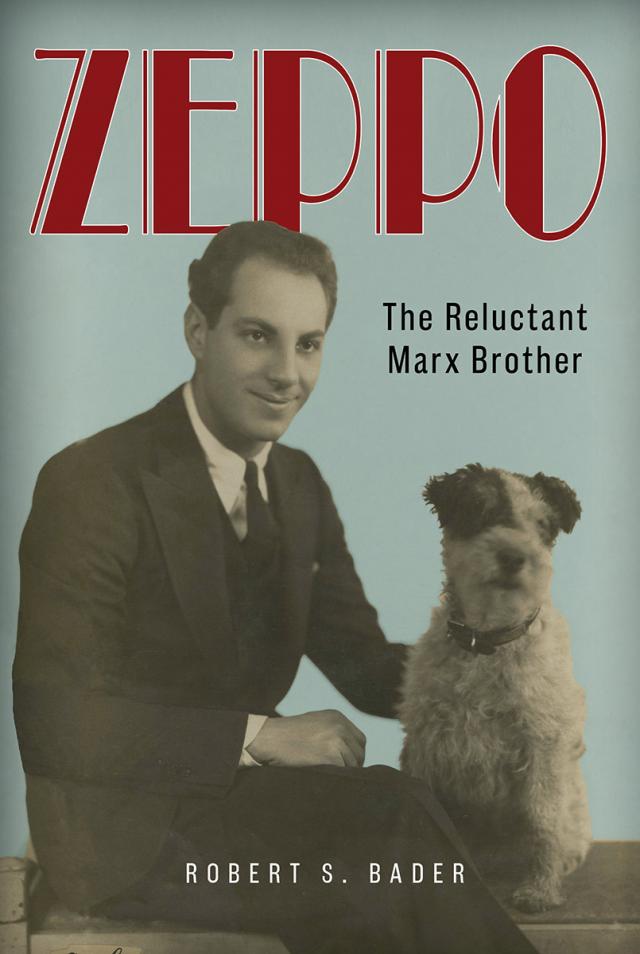
ZEPPO
ZEPPO
The Reluctant Marx Brother
ROBERT S. BADER
Essex, Connecticut
An imprint of Globe Pequot, the trade division of The Rowman & Littlefield Publishing Group, Inc.
4501 Forbes Blvd., Ste. 200
Lanham, MD 20706
www.rowman.com
Distributed by NATIONAL BOOK NETWORK
Copyright © 2024 by Robert S. Bader
All rights reserved. No part of this book may be reproduced in any form or by any electronic or mechanical means, including information storage and retrieval systems, without written permission from the publisher, except by a reviewer who may quote passages in a review.
All images are courtesy of Marx Brothers Inc. unless otherwise noted.
British Library Cataloguing in Publication Information available
Library of Congress Cataloging-in-Publication Data
Names: Bader, Robert S., author.
Title: Zeppo : the reluctant Marx brother / Robert S. Bader.
Description: Lanham : Applause, [2024] | Includes bibliographical references and index.
Identifiers: LCCN 2024011832 (print) | LCCN 2024011833 (ebook) | ISBN 9781493087969 (cloth) | ISBN 9781493087976 (epub)
Subjects: LCSH: Marx, Zeppo, 1901-1979. | Actors—United States—Biography. | Comedians—United States—Biography. | Talent scouts—United States—Biography.
Classification: LCC PN2287.M5423 .B33 2024 (print) | LCC PN2287.M5423 (ebook) | DDC 792.702/8092 #a B—dc23/eng/20240618
LC record available at https://lccn.loc.gov/2024011832
LC ebook record available at https://lccn.loc.gov/2024011833
The paper used in this publication meets the minimum requirements of American National Standard for Information Sciences—Permanence of Paper for Printed Library Materials, ANSI/NISO Z39.48-1992.
CONTENTS
Cover
Half Title
Title
Copyright
Contents
Preface
Introduction
CHAPTER 1: The Accidental Brother
CHAPTER 2: The Fifth Son Also Rises
CHAPTER 3: The Juvenile Six
CHAPTER 4: What’s in a Name?
CHAPTER 5: The Reluctant Vaudevillian
CHAPTER 6: A Guy Could Get Used to This
CHAPTER 7: Love and the Fourth Marx Brother
CHAPTER 8: Not the Brightest Light on Broadway
CHAPTER 9: Wall Street Lays an Egg
CHAPTER 10: Hooray for Hollywood
CHAPTER 11: The Great Race
CHAPTER 12: How to Succeed in Business without Really Trying
CHAPTER 13: Opportunity Knocks
CHAPTER 14: What Makes Herbie Run?
CHAPTER 15: Enter Miss Stanwyck
CHAPTER 16: This Thing of Ours
CHAPTER 17: Whose Clamp Is It Anyway?
CHAPTER 18: Trouble in Paradise
CHAPTER 19: Boys Will Be Boys
CHAPTER 20: The Other Marx Brothers
CHAPTER 21: Barbara Moves In
CHAPTER 22: The Second Time Around
CHAPTER 23: With Friends Like These...
CHAPTER 24: The Night We Called It a Day
CHAPTER 25: The Lion in Winter
CHAPTER 26: It Was a Very Bad Year
Zepilogue
Appendix I: Zeppo Marx on Stage
Appendix II: Zeppo Marx on Film, Radio, and Television
Notes
Bibliography
Acknowledgments
i
ii
iii
iv
v
vi
vii
viii
ix
x
1
2
3
4
5
6
7
8
9
10
11
12
13
14
15
16
17
18
19
20
21
22
23
24
25
26
27
28
29
30
31
32
33
34
35
36
37
38
39
40
41
42
43
44
45
46
47
48
49
50
51
52
53
54
55
56
57
58
59
60
61
62
63
64
65
66
67
68
69
70
71
72
73
74
75
76
77
78
79
80
81
82
83
84
85
86
87
88
89
90
91
92
93
94
95
96
97
98
99
100
101
102
103
104
105
106
107
108
109
110
111
112
113
114
115
116
117
118
119
120
121
122
123
124
125
126
127
128
129
130
131
132
133
134
135
136
137
138
139
140
141
142
143
144
145
146
147
148
149
150
151
152
153
154
155
156
157
158
159
160
161
162
163
164
165
166
167
168
169
170
171
172
173
174
175
176
177
178
179
180
181
182
183
184
185
186
187
188
189
190
191
192
193
194
195
196
197
198
199
200
201
202
203
204
205
206
207
208
209
210
211
212
213
214
215
216
217
218
219
220
221
222
223
224
225
226
227
228
229
230
231
232
233
234
235
236
237
238
239
240
241
242
243
244
245
246
247
248
249
250
251
252
253
254
255
256
257
258
259
260
261
262
263
264
265
266
267
268
269
270
271
272
273
274
275
276
277
278
279
280
281
282
283
284
285
286
287
288
289<
290
291
292
293
294
295
296
297
298
299
300
301
302
303
304
305
306
307
308
309
333
334
335
336
337
338
339
340
341
342
343
344
345
346
347
348
349
350
351
352
353
354
355
356
Guide
Cover
Half Title
Title
Copyright
Contents
Preface
Start of Content
Zepilogue
Appendix I: Zeppo Marx on Stage
Appendix II: Zeppo Marx on Film, Radio, and Television
Notes
Bibliography
Acknowledgments
PREFACE
IN THE SUMMER OF 1974, I INVITED GROUCHO MARX TO MY BAR MITZVAH. He did not attend. Whatever made me think a frail eighty-three-year-old man would fly from California to New York to attend a party for a kid he didn’t know was likely the result of my adolescent obsession with the Marx Brothers. I figured if he could only know how much of a fan I was, he would surely come. But I wasn’t too disappointed. None of the Beatles came either. However, several elderly Jewish men—a few of whom smoked cigars and resembled Groucho—did manage to attend the affair.
For some reason I was not discouraged and still felt compelled to contact the other surviving Marx Brothers. That fall, when I learned that Zeppo Marx lived in Palm Springs, California, I located the Palm Springs phone book at the New York Public Library. He was listed. (I later figured out this was probably in case any young ladies were trying to reach him. He had little interest in hearing from thirteen-year-old Marx Brothers fans.) With great poise I picked up the phone a few days later and dialed his number. The voice on the other end said, “Hello?” and I said, “May I please speak with Zeppo Marx?” I had thought about this opening line for quite some time and decided it was as polite and professional as it could be. The voice on the phone replied, “He’s not here.” This was followed by a loud click. But the voice sure sounded like the one that left out a Hungerdunger in Animal Crackers. I checked the cassette recording I’d illicitly made at the Sutton Theatre when the film had a theatrical reissue that summer and was convinced that I’d just gotten the brush from Zeppo himself.
A few weeks later I heard my father bellow, “Who the hell called California?” when the phone bill arrived. In 1974—years before everyone had a cell phone and could call anywhere in the country very inexpensively—my less-than-a-minute, long-distance call to Zeppo Marx accounted for a significant portion of our normally modest phone bill. My efforts to contact the surviving Marx Brothers were ended by one phone bill just before I could take a shot at Gummo. Just as well, though. At the time I had no reference recording to authenticate his voice.
My curiosity about Zeppo got absorbed into my general Marx obsession, but I always wondered about him. What did he do after leaving the Marx Brothers? If he had spoken to me that day, I would have asked him why he wasn’t in A Night at the Opera. In retrospect I must admit he made the right move by hanging up on me. But it was a reasonable question from a kid who had only just seen that film for the first time and was hoping to see Zeppo pop out of that steamer trunk with Harpo and Chico. He was so good in Monkey Business. How could the Marx Brothers take another ocean voyage without him? I would spend the next several decades researching the Marx Brothers, getting to know their children, and learning all I could about them. The culmination of this quest for Marxian knowledge was the publication of my book, Four of the Three Musketeers: The Marx Brothers on Stage, in 2016. There was quite a lot to pack into that rather hefty book and certain sacrifices were made to ensure that readers could lift it. Among the topics only touched on slightly were Zeppo’s life before and after his time in the Four Marx Brothers.
His story is very different from his brothers, starting with the notable change of venue for his childhood. While the other boys all came of age in New York City together, Zeppo was moved to Chicago as a boy and roamed the streets alone while Groucho, Harpo, Chico, and Gummo were traveling America’s vaudeville circuits. Over the years I had heard about a college professor working on a Zeppo biography and hoped it would get published. This fellow contacted me in the mid-1990s—a couple of years after the publication of Groucho Marx and Other Short Stories and Tall Tales, an anthology of Groucho’s lost writings that I had edited. I met with him at the New York Public Library for the Performing Arts at Lincoln Center and provided him with some of my research. I never heard from him again. I tried to reach him a couple of times to see where he was with the book. His email bounced back, and his phone had been disconnected. This seemed completely in line with Zeppo’s reaction to my adolescent phone call.
Around twenty-five years later Zeppo’s son Tim, by this time a good friend, called me to discuss a new prospective Zeppo biographer. While well-intentioned, this man just didn’t have a lot of familiarity with the subject and would have needed to really start from scratch. Tim, having learned a lot about his father from reading Four of the Three Musketeers, said, “You should write the Zeppo biography.” It didn’t take much persuading from Tim to get me started. I already had a wealth of information about Zeppo’s early life that didn’t make it into Four of the Three Musketeers. I also had some very interesting material about his life after the Marx Brothers that was outside the scope of that earlier book.
With a good head start I began doing research and found more surprises about Zeppo than I thought possible. It has often been suggested that Zeppo was the funniest brother off stage. I’m in no position to judge that but I’m pretty sure he had the most unusual and interesting life of any of the Marx Brothers. Zeppo’s life played out like an adventure story featuring a very restless hero—or antihero, depending on your sensibilities. Being pushed into show business probably saved Zeppo’s life. His best friends from his teen years in Chicago spent much of their adult lives in prison, and one of them was killed in a police raid. He was on that path when vaudeville interrupted his burgeoning life of crime on the streets of Chicago.
Zeppo was a frequent object of ridicule during his show business career, and the passage of time has done little to help his legacy. Once a punchline for his brothers and critics, Zeppo is now a convenient pop culture reference synonymous with being useless, unfunny, or expendable. A 1999 episode of the popular television series Buffy the Vampire Slayer, titled “The Zeppo,” concerns a character—referred to as “the Zeppo of the group”—being deemed unimportant. A 1992 episode of the hit situation comedy series Cheers reveals that the dour, humorless Lilith character’s favorite Marx Brother is Zeppo. She says, “Isn’t Zeppo hysterical? The way he just stands there without expression or reaction. Boy, that cracks me up.”
Even when Zeppo is praised, there seems to be some obligation to knock him a bit. Film critic James Agee, reviewing Kyle Crichton’s 1950 Marx Brothers biography in Films in Review wrote, “I have never seen anyone give Zeppo adequate appreciation in print, and had hoped to find that here, but no; except in the excellent illustrations his peerlessly cheesy improvement on the traditional straight man is never recorded.” In The Marx Brothers: Their World of Comedy, Allen Eyles wrote, “Zeppo, the fourth Marx Brother is not so interesting, but he is worth having for all his awkwardness just because he is one of the family.” In The Comic Mind: Comedy and the Movies, Gerald Mast discusses Zeppo’s contribution to the first five Marx Brothers films: “Zeppo added a fourth dimension in the Paramounts as the cliché of the straight man and juvenile, the bland, wooden espouser of sentiments that seem to exist only in the world of the sound stage.” Mast goes on to say, “Zeppo was a parody of the romantic juvenile—too schleppy, too nasal and too wooden to be taken seriously.” Okay, Zeppo’s good but only because he’s cheesy, not so interesting, awkward, bland, schleppy, nasal and wooden. Got it.
So why then are the first five Marx Brothers films—the ones they made for Paramount before Zeppo left the act—widely considered their best? Could it be the presence of Zeppo? Whatever his individual contribution amounts to, there is no mistaking his value in making the Marx Brothers a quartet—The FOUR Marx Brothers—as they were in vaudeville and on Broadway in perhaps their peak period. They work best as a foursome, often breaking down into two separate teams—Groucho and Zeppo, Harpo and Chico. Zeppo is easily overlooked but at least one bona fide movie star saw something in him that was universally missed by others. Cary Grant saw the Marx Brothers in vaudeville when he was still known as Archie Leach and was working as an acrobat. According to biographer Marc Eliot, Grant believed Zeppo’s foil timing was a big part of the act’s success. Grant also took to dressing like Zeppo and wearing his hair in the same style. But Cary Grant stood alone. There weren’t many non-fictional characters who’d say Zeppo was their favorite Marx Brother.






